|

Phone: (817) 232-9575
The Thermal Spray Process
Flame Spraying
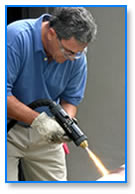
In the flame-spraying process, oxygen and a fuel gas, such as acetylene, propane, or propylene, are fed into a torch and ignited to create a flame. Either powder or wire is injected into the flame where it is melted and sprayed onto the work piece
Flame spraying requires very little equipment and can be readily performed in the factory or on site. The process is fairly inexpensive and is generally used for the application of metal alloys. With relatively low particle velocities, the flame spray process will provide the largest buildups for a given material of any 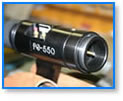 of the thermal spray processes. Low particle velocities also result in coatings that are more porous and oxidized as compared to other thermal spray coatings. Porosity can be advantageous in areas where oil is used as a lubricant. A certain amount of oil is always retained within the coating and thus increases the life of the coating. The oxides increase hardness and enhance wear resistance. With regard to hard facing, self-fluxing alloys are typically applied by flame spraying and then fused onto the component. The fusing process ensures metallurgical bonding to the substrate, high interparticle adhesive strength, and very low porosity levels. of the thermal spray processes. Low particle velocities also result in coatings that are more porous and oxidized as compared to other thermal spray coatings. Porosity can be advantageous in areas where oil is used as a lubricant. A certain amount of oil is always retained within the coating and thus increases the life of the coating. The oxides increase hardness and enhance wear resistance. With regard to hard facing, self-fluxing alloys are typically applied by flame spraying and then fused onto the component. The fusing process ensures metallurgical bonding to the substrate, high interparticle adhesive strength, and very low porosity levels.
|




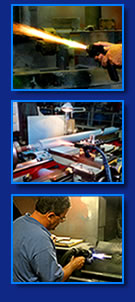


 melted by a flame or electricity and sprayed onto the work piece. During the actual process, the spray torch makes successive passes across the work piece to produce a coating. Like all industrial processes, thermal spraying has its advantages and limitations. These have to be kept in mind in order to take proper advantage of thermal-sprayed coatings. The following are some of the benefits of thermal spray coatings.
